
By Thornical Press –
December 31, 2025
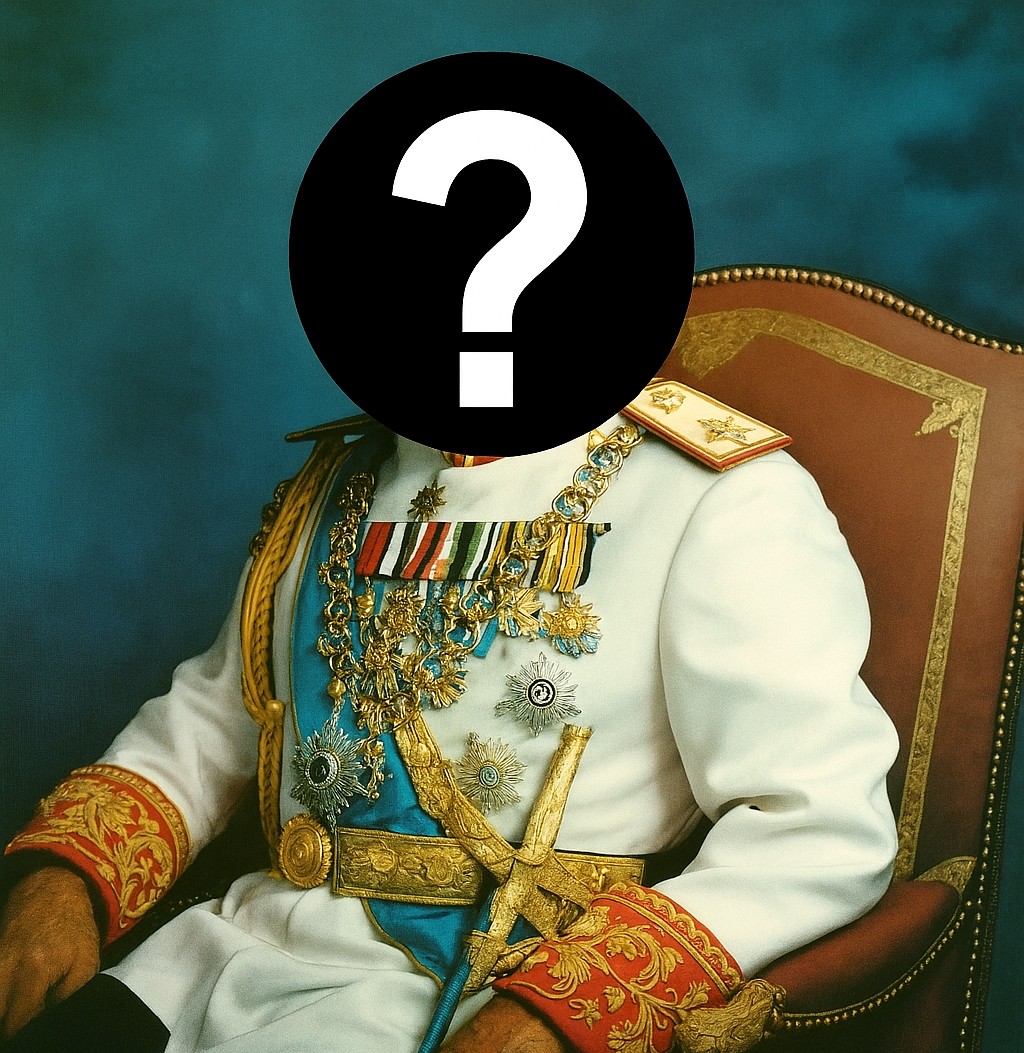
There is a conversation Iran must have about the shape of its future: how to secure liberty, protect citizens from state abuse, and build institutions that can withstand the temptations of power. One proposal that deserves serious consideration is the restoration of a constitutional monarchy under the Shah as a symbolic, stabilizing head of state—reimagined and constrained by a modern constitution whose central purpose is to safeguard individual freedom and limit government overreach. This is not a call to revive autocracy or to erase the hard-won lessons of the past. It is an argument for a political architecture that can combine continuity, national unity, and a robust set of legal protections for citizens against arbitrary authority.
Under the Islamic Republic, widespread human rights violations have been documented, including arbitrary killings, torture, unfair trials, and mass executions. Official and independent reports record executions after trials lacking due process, deaths in custody, and the use of torture to extract confessions. Human rights organizations have catalogued systemic violations across ethnic, religious, and political lines, documenting patterns of arbitrary arrest, suppression of dissent, and restrictions on basic freedoms.
Political systems are not merely collections of leaders; they are frameworks that channel incentives, check abuses, and shape civic life. Democracies can fail when institutions are weak, when power concentrates without effective constraints, or when the rule of law is subordinated to factional interests. Conversely, constitutional arrangements that embed checks and balances, independent judiciaries, and clear protections for civil liberties can make freedom durable even in difficult times. A constitutional monarchy—if genuinely constitutional—offers a distinctive institutional resource: a nonpartisan, above-the-fray head of state who can embody national continuity while leaving policy to accountable, elected officials.
For Iran, a country with deep historical memory and a complex social fabric, the symbolic and stabilizing role of a constitutional monarch could be valuable. The Shah, as a figurehead bound by a written constitution and limited powers, could serve as a unifying presence during transitions, a guardian of constitutional norms, and a moral check on the excesses of partisan politics. The key is to design the monarchy so that it strengthens, rather than weakens, democratic governance and individual rights.
Any proposal to restore a monarchy must place the protection of citizens at its core. A modern constitutional monarchy for Iran should be built around several nonnegotiable principles:
- Supremacy of the constitution and the rule of law. The monarch’s role must be explicitly subordinate to a written constitution that guarantees civil liberties, equality before the law, and clear limits on executive power. The constitution should be the highest law, with robust mechanisms to enforce it.
- Separation of powers and judicial independence. Courts must be empowered to review government action and to protect citizens’ rights without political interference. Judicial appointments should be transparent and merit-based, with safeguards against politicization.
- Civil and political rights guaranteed. Freedom of speech, assembly, religion, and association must be enshrined and protected. Laws that criminalize dissent or permit arbitrary detention must be abolished or reformed.
- A nonpartisan, ceremonial monarch with reserve powers. The monarch should act as a constitutional guardian—able to refuse to sign legislation that clearly violates the constitution, to call for impartial investigations into abuses, and to facilitate peaceful transitions. These reserve powers must be narrowly defined, subject to judicial review, and used only to uphold constitutional order.
- Accountability and transparency. All branches of government, including the royal household, should be subject to transparency rules, financial oversight, and anti-corruption measures.
One of the strongest arguments for a constitutional monarch is the potential to provide a nonpartisan check on abuses that elected officials might commit. In polarized systems, elected leaders can be tempted to use state power to silence opponents, manipulate institutions, or concentrate authority. A monarch who stands above party politics—whose legitimacy derives from the constitution and the nation rather than from partisan victory—can act as a steadying influence. By publicly defending constitutional norms, calling for impartial investigations, and refusing to legitimize unlawful measures, a monarch can help create political costs for abuses of power.
This role is not hypothetical. In other constitutional monarchies, ceremonial heads of state have sometimes played crucial roles in moments of crisis—encouraging compromise, insisting on constitutional procedures, and helping to defuse tensions. The difference between a monarch who protects rights and one who undermines them lies entirely in the constitutional constraints and the culture of accountability that surround the office.
Iran’s modern history is marked by ruptures that have left deep wounds. A constitutional monarchy can offer a form of continuity that helps bridge those divides without erasing accountability. The monarch can be a focal point for national identity that transcends factionalism, while the democratic institutions handle policy and governance. This separation can reduce the stakes of electoral competition and make it easier for political actors to accept the legitimacy of outcomes they disagree with. For example, Spain’s transition after Franco showed how a restored monarchy can facilitate democratization when paired with institutional reform. King Juan Carlos I endorsed reforms that led to the 1978 constitution, a negotiated political opening, and peaceful elections—despite the persistence of Francoist elites early in the process. Spain combined inclusive constitutional drafting, legal reforms, and political compromise to consolidate democracy, and the monarchy acted as a unifying symbol while real power shifted to elected institutions.
Moreover, a carefully designed monarchy can facilitate reconciliation by providing a neutral platform for dialogue. The monarch’s moral authority—if exercised in defense of rights and the constitution—can encourage former adversaries to engage in political life rather than resort to extra-legal measures. That potential for reconciliation is not a panacea, but it is a pragmatic asset in a society seeking to rebuild trust in public institutions.
Supporters of a restored monarchy must confront the legitimate fears that such a move could be a cover for authoritarianism. Those fears are real and must be addressed head-on. The answer is not to reject the idea out of hand but to insist on rigorous safeguards:
- Transparent constitutional drafting. Any new constitution must be drafted through an inclusive, participatory process with broad civic input and international legal expertise to ensure rights protections meet global standards.
- Sunset clauses and review mechanisms. New institutions should be subject to periodic review and possible amendment through democratic processes, preventing entrenchment of power.
- International human rights commitments. Iran should recommit to international human rights treaties and allow independent monitoring to ensure compliance.
- Civil society empowerment. A vibrant civil society, free press, and independent academia are essential to hold all institutions accountable, including the monarchy.
These safeguards transform the monarchy from a potential threat into a constrained institution designed to protect citizens from the very abuses that have plagued Iran.
A return to constitutional monarchy must be pursued through peaceful, legal, and democratic means. Any transition that relies on force or external imposition would undermine legitimacy and risk repeating the cycles of repression Iranians have endured. Practical pathways include national dialogues, referenda on constitutional arrangements, and transitional commissions to address past abuses and recommend institutional reforms. The monarch’s role in such a transition should be to facilitate consensus and to endorse a constitutional settlement that prioritizes rights and accountability.
Iranian citizens deserve a political order that protects them from arbitrary detention, censorship, and the misuse of state power. Whether the solution is a republic, a parliamentary system, or a constitutional monarchy, the central criterion must be the protection of individual freedom and the prevention of government abuse. A constitutional monarchy—if designed with these priorities at its heart—offers a distinctive institutional tool to achieve those ends: a unifying, nonpartisan head of state who can defend constitutional norms and help stabilize democratic governance.
This is not an argument for nostalgia or for ignoring the past. It is an argument for pragmatic institutional design that places the rights and dignity of citizens above ideology. The question for Iranians and for those who care about human rights is not whether the idea of monarchy is emotionally resonant, but whether a constitutional framework can be constructed that reliably protects freedom, limits power, and fosters a culture of accountability.


 Thornical Press