
By Thornical Press
January 14, 2026
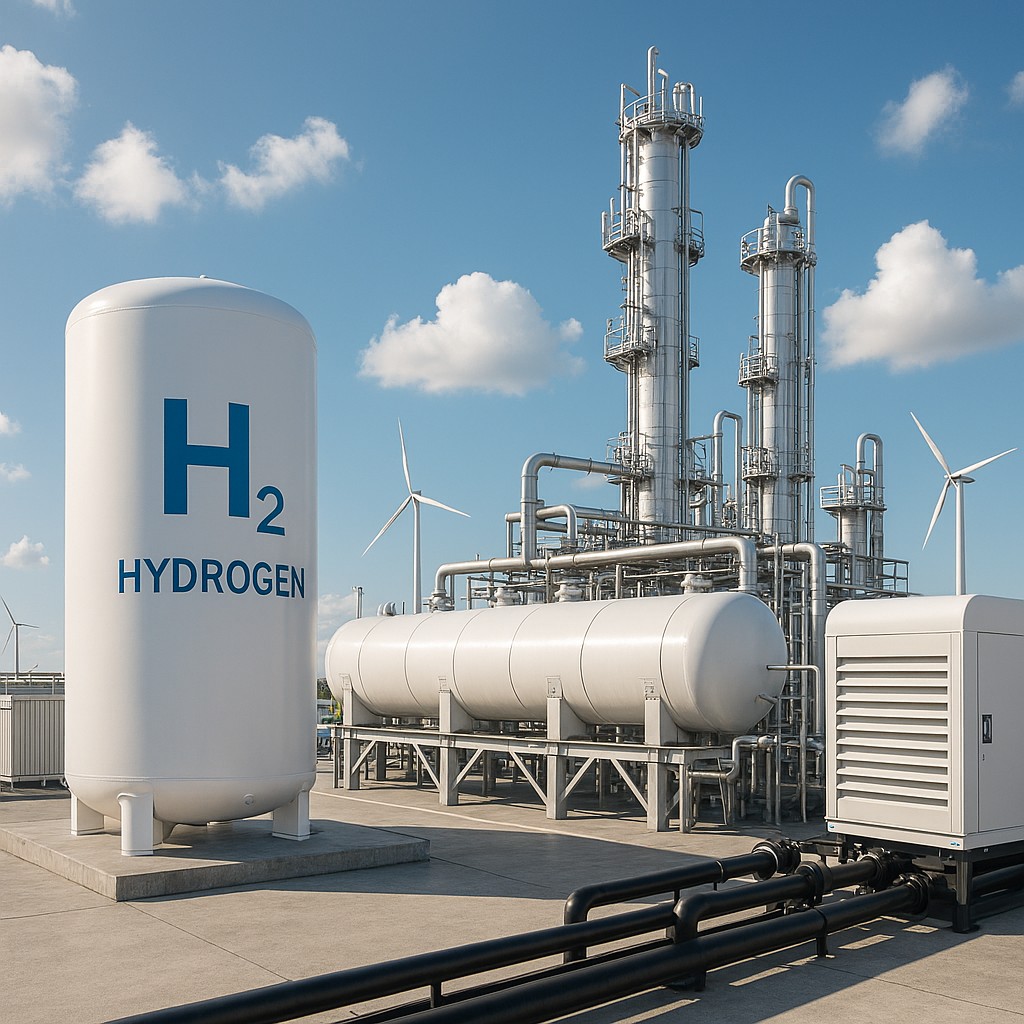
The European Commission has formally cleared a €200 million German state aid package designed to stimulate the production of renewable hydrogen in Canada, marking a significant step in the European Union’s pursuit of energy diversification and decarbonization. The scheme, approved under the bloc’s stringent competition rules, is expected to unlock a matching €200 million in funding from the Canadian government, creating a transatlantic financial bridge for the development of renewable fuels of non-biological origin (RFNBOs). These synthetic fuels, derived from renewable electricity and carbon dioxide, are intended for export to Germany and subsequent sale across the European market.
The initiative centers on a sophisticated “double auction” mechanism designed to bridge the price gap between high production costs and market demand. Under this system, the German government will facilitate contracts between Canadian producers offering the lowest sales prices and European buyers offering the highest purchase prices, using state resources to cover the financial deficit. This market-based approach aims to support the construction of up to 300 MW of electrolysis capacity. Officials expect the project to prevent approximately 2.47 million tonnes of carbon dioxide emissions, directly assisting Germany in meeting its obligations under the EU’s climate targets and the Renewable Energy Directive.
In its assessment, the Commission determined that the measure was necessary to incentivize investment that would otherwise not occur at the same scale. By utilizing an open and transparent bidding process—slated for conclusion in 2027—the scheme ensures that aid is kept to a minimum while preventing undue distortions to competition. The Commission highlighted that the project aligns with the broader goals of the REPowerEU Plan to eliminate dependence on Russian fossil fuels and the Clean Industrial Deal, which seeks to accelerate the continent’s green transition. Beneficiaries must strictly adhere to EU environmental criteria, ensuring that emission savings reach at least 70% across the entire value chain.
This approval follows two previous international hydrogen schemes sanctioned in 2021 and 2024, reinforcing the EU’s strategy of securing renewable energy supplies from global partners. As the 2023 amendments to the Renewable Energy Directive have increased the target for renewable energy to 42.5% of gross consumption by 2030, the Canadian-German partnership is seen as a vital component in reaching the mandate that 42% of industrial hydrogen be renewable by the end of the decade. The decision underscores a growing reliance on international cooperation to meet the surging demand for clean energy technologies as the European Union prepares for a large-scale deployment of hydrogen infrastructure through 2035.
The European Commission serves as the executive engine of the European Union, with roots tracing back to the 1951 Treaty of Paris and the establishment of the High Authority of the European Coal and Steel Community, an organization designed to make war between European rivals “materially impossible” by integrating their core industries. Following the 1957 Treaty of Rome, which created the European Economic Community (EEC), the modern Commission was officially unified in 1967 through the Merger Treaty, consolidating the executive powers of the various European communities into a single body. Over the subsequent decades, treaties such as Maastricht (1993) and Lisbon (2009) have significantly expanded its mandate, transforming it into the “guardian of the treaties” responsible for proposing legislation, enforcing EU law, and representing the bloc on the global stage through its College of Commissioners.



 Thornical Press